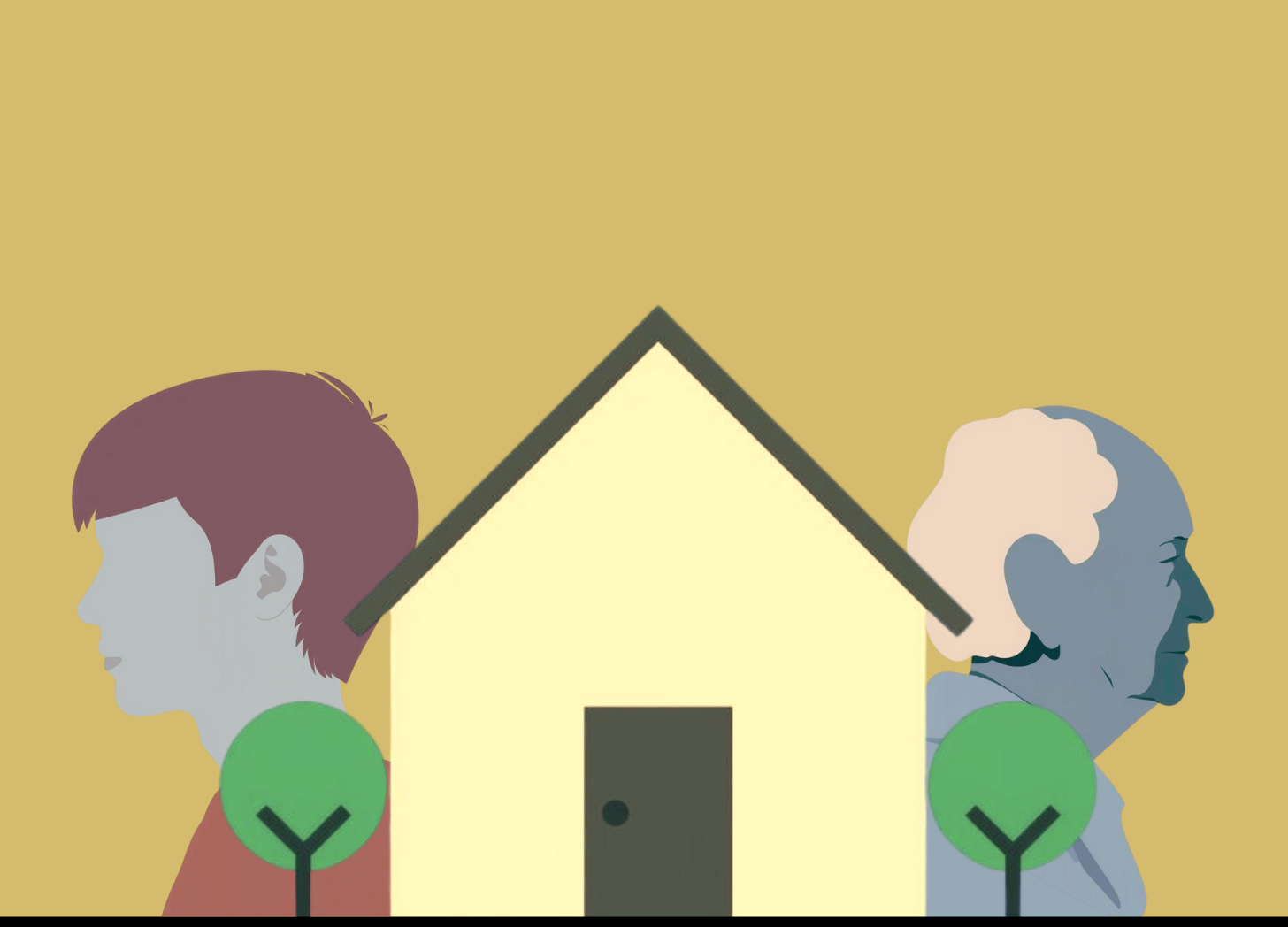
My wife and I recently became empty nesters when our daughter moved out. The house stayed the same, but our relationship with it didn’t. The questions of what we’re managing and why we’re managing it felt heavier.
When we moved in with our two small children, the house was really a container for raising kids, and our decisions to buy it were tactical: did it have enough bedrooms, was it close enough to schools, would it be able to accommodate all the activities and motion of raising kids.
Now the container feels overbuilt. It’s not the emptiness as much as the complexity. Managing a house at this stage of life is unlike anything we encountered at 35 or even 45. The decisions carry longer tails with fewer do-overs and more second- and third-order effects.
And for added complexity, both of my kids are opposed to any changes.
New wallpaper or wall colors? Four thumbs down. Downsizing? Opposed. Moving? Absolutely not, because why would you leave OUR house?
They see a connection to childhood, a fixed point they still orbit, even if they do it as satellites from their own places. Their perspective conflicts with our desire to adapt and future-proof our empty nest lives.
The sandwich generation problem and “place planning fatigue”
Now, what if we added a third generation to this decision tree: my aging parents. Many of us Gen Xers aren’t just thinking about our place—we’re also navigating place challenges with our parents.
A vast number of aging parents live in homes that no longer fit their changing needs, yet they have dug in about moving. They do nothing until circumstances force them to make a rushed decision.
That leaves us crushed between competing generations:
Our children pulling us emotionally backward.
Our parents pulling us administratively and operationally forward.
Our own planning stuck in the middle.
This is one of the least acknowledged dynamics of Gen X aging: place planning fatigue. We tell ourselves we’ll deal with our situation after we help our parents “figure theirs out.” Except theirs often never fully resolves until the status quo can no longer be maintained and families scramble for the least bad unpreferred outcome. Procrastinaging becomes intergenerational and co-dependent.
When every option feels wrong, the brain treats “no decision” as a decision—and rewards it.
From housing crisis to place planning
Ryan Frederick has been working this terrain for the last two decades. Author of Right Place Right Time and the CEO of Here.life, Ryan’s career spans senior housing, real estate, and private equity. I had him workshop with clients last year and was struck by how late—and how narrowly—place decisions tend to get made.
Most conversations focus on cost, taxes, resale value, square footage, or similar things. Rarely do they focus on how a place actually supports daily life, health, and connection over time.
That’s where place planning comes in. It’s not about convincing people to move. It’s about shifting the frame from house as asset to place as system. For Gen X empty nesters, this frame shift is overdue—and emotionally loaded.
Not seeing the place forest for the money trees
I see this play out constantly in my financial advisory work.
One late-70s couple, Timothy and Julia, came to me convinced they had a financial problem. Too much equity locked in the house. Anxiety about future care costs. Fear that staying put was irresponsible.
But the real issue wasn’t money, it was place. Their home required constant maintenance. They had to drive to go anywhere. Social interaction had dwindled. One partner had quietly stopped using part of the house because of stairs—something no spreadsheet captured.
Once we reframed the conversation around place—how they lived, who they saw, what would happen if mobility changed—the financial path clarified. They had previously thought that finances were the constraint, but we discovered they had it backwards. A move closer to services and community reduced risk, lowered stress, and freed capital.
Why place planning gets messy when parents also come into the picture
Ryan’s four dimensions—environment, health, community, and finances—rarely line up neatly. When we layer in our parents’ place needs on top of our own, the complexity increases exponentially.
For our own place planning, the questions are usually forward-looking:
How will this house support our daily life as we age?
What barriers does it create (stairs, distance from services, isolation)?
How much do we want to invest in maintenance versus adaptation?
Add the reality that many older parents are moving in with their adult children, and the calculus gets wider and more emotional. In 2024, roughly 17 percent of homes purchased were multigenerational—the highest in at least a decade—with Gen X leading the trend.
Suddenly place planning isn’t just about optimizing our life. It’s about reconciling:
What works for us now.
What might support our parents’ needs—including the possibility they’ll move in.
How staying put or moving might affect everyone’s health, mobility, and access to support.
How resources (space, money, time) get distributed among generations.
Critically, place planning isn’t a zero-sum negotiation. But it does require surfacing and aligning preferences that are rarely discussed openly. When everyone’s future well-being depends on where all of us live and how we live there, the trade-offs get sharper—and procrastination becomes easier to justify and harder to overcome.
Aging in place is a preference, not a plan
Here’s one of Ryan’s most useful reframes: aging in place is not a plan—it’s a preference. I hear my own advisor voice asking, “Is aging in place a default resignation or symptom of procrastination, or is it a proactive strategy with a defined process to enable success?”
Eighty-five percent of people over 50 want to stay where they are, yet only 15 percent have taken concrete steps to make that viable. If we’re looking for a concentration of Procrastinagers, here it is.
Gen X often sits with the evidence of that failure firsthand, watching parents forced into decisions by falls, hospitalizations, or burnout. Yet we still hesitate to act differently for ourselves, because many times we’re exhausted, we don’t want to open another front, and we’re already managing too much place complexity for everyone else.
Which is why Ryan is so right when he says that place is the least threatening way to talk about aging. It’s concrete. It’s observable. It’s neutral enough to start a conversation without triggering defensiveness. And it allows us to plan before decline, rather than in reaction to it.
Time to practice what I preach with my house
So here my wife and I sit, empty nest, kids advocating for stasis, inventory management challenges (more on that in a future post), and parents reminding me what happens when planning is postponed.
Thankfully, place planning doesn’t demand immediate answers. It does demand attention, however, which is why giving this moment my attention is important.
I’m not making any big decisions tomorrow (redecorating aside). But I’m done pretending that inaction is neutral. The house hasn’t changed, but the role it plays in my life has, and I want to plan what I’ll do about it before I’m forced to do something about it.
And for Gen X—caught between children, parents, and systems that only respond after failure—that may be the most radical act we can begin to take.
Disclosure: Client examples are illustrative only and do not represent the experience of all clients or any guarantee of outcomes.
Originally published by Tom West on Age Against The Machine.